
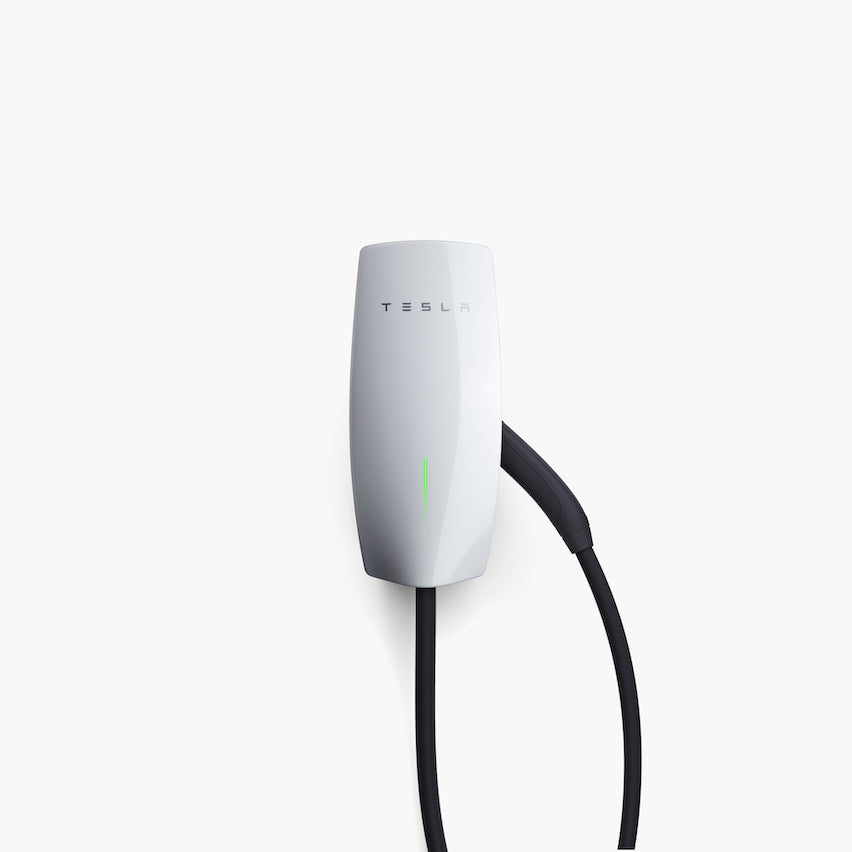
A basic non-smart 7kW home charger unit costs $700 to $1,500, and a smart, app connected unit such as a myenergi Zappi or Ohme Home Pro runs $1,200 to $2,200. Installation labour for a standard job with no switchboard upgrade typically adds $750 to $1,500, per Tesla's own published guidance. All up, budget $1,500 to $3,000 for a straightforward single phase install, more if your switchboard needs upgrading or the cable run is long.
The short version
- A standard single phase 7kW charger costs roughly $1,500 to $3,000 fully installed, unit and labour combined.
- Tesla's own guidance quotes $750 to $1,500 for standard labour, more for a long cable run, trenching or a switchboard upgrade.
- A 22kW three phase charger costs $2,500 to $4,500 installed and charges about three times faster.
- Smart, solar capable chargers such as Zappi and Ohme cost more upfront but let you charge from your own solar automatically.
- Get your switchboard and cable run inspected before accepting a quote, since that is what actually drives the price.
Charger cost comparison
- Tesla Wall Connector (Gen 3): unit $700 to $800, fully installed $1,500 to $2,300
- Basic non-smart 7kW charger: unit $700 to $1,500, fully installed $1,500 to $3,000
- myenergi Zappi (solar capable): unit $1,200 to $1,800, fully installed $2,000 to $3,300
- Ohme Home Pro / ePod (solar capable, clamp included): unit $1,200 to $1,400, fully installed $2,000 to $2,900
- 22kW three phase charger: unit varies by brand, fully installed $2,500 to $4,500
What drives the installed price up
Tesla's own installation guidance lists the specific things that push a job above the standard $750 to $1,500 labour range: a long cable run from the switchboard to the parking spot, trenching for an underground cable, a switchboard upgrade or new sub panel if your existing board lacks capacity, a wall mounted stand if there is no suitable wall nearby, and concealed cabling for a tidier finish. Any one of these can add several hundred dollars, and more than one at once can push a job toward the top of the range or beyond it.
Single phase versus three phase
Most Australian homes run single phase power, which limits a home charger to around 7kW, adding roughly 40km of range per hour of charging for a typical EV. Three phase supply allows a 22kW charger, charging roughly three times faster, but the install is more involved and usually costs $2,500 to $4,500 fully installed, partly because three phase wiring and switchboards are less common in older homes and may need upgrading.
Is a smart, solar capable charger worth the extra cost
If you have solar, yes, in most cases. A smart charger with a current transformer clamp, such as the Zappi or Ohme Home Pro, can automatically match your charging rate to your solar export, so you charge from your own free power rather than paying for grid electricity during the day. Ohme includes the clamp in the box, while some competitors charge extra for it, worth checking before you buy. Without solar, a basic non-smart charger, or the Tesla Wall Connector for Tesla owners, is a perfectly reasonable and cheaper option.
Renters and apartments
If you rent or live in an apartment, a fixed home charger install usually needs landlord or body corporate approval, and the cost calculus is different, since you may not stay long enough to justify a $2,000 to $4,500 fixed install. In that situation a portable Level 2 charger you can take with you, or simply relying on public and workplace charging, is often more practical than a permanent wallbox.
Real installers to check
JET Charge and EVSE Australia both sell and install EV chargers across Australia and are worth getting a quote from alongside your regular electrician, since dedicated EV installers are generally more familiar with the specific compliance and load management requirements than a general sparkie doing their first EV job.
Rebates that can offset the cost
Some state EV programs and energy retailers offer a discount or subsidy specifically for a home charger install, separate from the federal solar and battery rebates, though availability changes often and varies by state. Ask your electricity retailer directly whether they run an EV charger or EV plan sign up incentive before booking your install, since it can meaningfully offset the labour cost above.
How to get an accurate quote
Have the installer inspect your switchboard and the route from it to your parking spot before quoting, rather than accepting a flat "from" price over the phone, since the biggest cost blowouts come from switchboard capacity and cable run length, both of which are specific to your house, not a generic number.
Compare home chargers with AUD pricing on the WattsUp Home Chargers guide. See real running costs in how much it costs to charge an EV, and learn to charge from solar properly in charging your EV with solar.
Frequently asked questions
How much does a home EV charger cost installed in Australia?
Roughly $1,500 to $3,000 fully installed for a standard single phase 7kW charger, unit and labour combined, assuming no switchboard upgrade is needed.
Why do EV charger installs vary so much in price?
Mainly the cable run distance from your switchboard, whether your switchboard needs an upgrade, whether you have single or three phase power, and whether you choose a basic or smart, solar capable unit.
Is a three phase EV charger worth it?
If your home already has three phase power and you want the fastest possible home charging, yes, though it typically costs $2,500 to $4,500 installed versus $1,500 to $3,000 for single phase.
Do I need a smart charger if I have solar?
Not strictly, but a smart, solar capable charger like a Zappi or Ohme lets you charge automatically from your solar export rather than the grid, which meaningfully cuts your running cost if you already have solar.
How long does a home EV charger installation take?
A standard job with no switchboard upgrade is typically completed in a few hours by a licensed electrician or dedicated EV installer.