
Last updated 3 July 2026. Written by the WattsUp.au team.
A legal e-bike in Australia is capped at 250 watts of continuous power, with the motor cutting out once you reach 25 km/h, and any throttle limited to walking pace. That test is the same in every state and territory. What differs in 2026 is how hard each government is now cracking down on the high powered, throttle controlled bikes that fail it.
The short version:
- National baseline everywhere: 250 W pedalec (EN15194) or 200 W power assisted pedal cycle, motor assistance cuts out at 25 km/h, throttle only works up to 6 km/h.
- Anything stronger, faster or throttle controlled past walking pace is legally a motor vehicle, not a bicycle, and needs registration, a licence and insurance.
- NSW passed a law in 2026 letting police seize and permanently crush illegal e-bikes, modelled on WA's existing power.
- Queensland is introducing Australia's first e-bike licence requirement, from 31 August 2026, for riders 16 and over.
- NSW also now requires certified batteries and chargers from 1 February 2026, with fines up to $825,000 for sellers of noncompliant products.
State and territory quick reference
- NSW: 250 W for new bikes from 1 March 2026. Illegal e-bike penalty is seizure and permanent crushing. 2025 to 2026 change: battery certification from 1 February, crush law from 24 March.
- Victoria: 250 W for an EPAC or 200 W for a PAPC. Illegal e-bike penalty is an unregistered vehicle fine of over $1,000. No new structural change confirmed for 2025 to 2026.
- Queensland: 250 W, EN15194. Illegal e-bike penalty is seizure and destruction from 1 July 2026. 2025 to 2026 change: a licence requirement from 31 August 2026.
- Western Australia: 250 W for a pedalec or 200 W for a PAPC. Illegal e-bike penalty is up to $500 plus seizure and disposal. 2025 to 2026 change: the Operation Moorhead enforcement sweep in 2026.
- South Australia: 250 W for an EPAC or 200 W for a PAPC. Illegal e-bike penalty not publicly quantified. 2025 to 2026 change: a public review of e-bike rules open through 2026.
- Tasmania: 250 W for an EPAC or 200 W for a PAPC. Illegal e-bike penalty not publicly quantified. 2025 to 2026 change: an e-bike regulations review underway.
- ACT: 250 W for a pedalec or 200 W for a PAPC. Illegal e-bike penalty not publicly quantified. No new 2026 amendment identified.
- Northern Territory: no NT-specific figure published, so the national 250 W or 200 W test applies by default. Illegal e-bike penalty not publicly quantified. No 2026 change identified.
What counts as a legal e-bike everywhere in Australia?
Every state and territory uses the same two categories, drawn from the national vehicle standards and the Australian Road Rules. A pedalec, the EN15194 standard, tops out at 250 watts of continuous rated power, with assistance reducing progressively above 6 km/h and cutting out completely at 25 km/h. A simpler power assisted pedal cycle caps the motor at 200 watts and keeps pedalling as the main way the bike moves. A throttle is allowed on either type, but only to help you get started, up to 6 km/h. Above that speed, the motor may only assist pedalling. Meet that test and your e-bike is treated as a bicycle everywhere in the country. Fail it, on power, on throttle behaviour, or by having no working pedals at all, and it is a motor vehicle, which means registration, a licence and CTP insurance wherever you ride it.
What is different about NSW right now?
NSW is the epicentre of Australia's e-bike enforcement push. New e-bikes must meet a 250 watt ceiling from 1 March 2026, down from a 500 watt legacy allowance, with older bikes grandfathered until 1 March 2029. From 1 February 2026, e-mobility batteries, chargers and devices sold in NSW must carry an accredited safety certificate, with fines of up to $825,000 for noncompliant sellers. Then, on 24 March 2026, the state introduced a bill giving police and transport officers the power to seize and permanently crush illegal e-bikes and e-motorbikes, including roadside dyno units to test whether a bike can exceed 25 km/h. There is no return of a crushed bike to its owner.
What changed in Queensland?
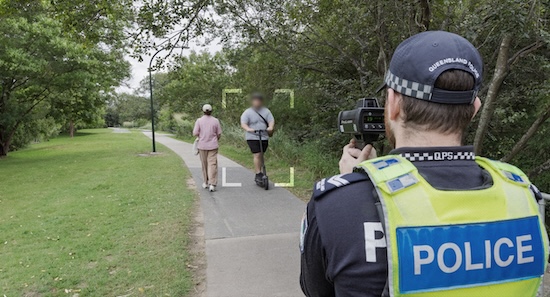
Queensland's e-bike rules took a major update from 1 July 2026 alongside its e-scooter reforms: the same 250 watt, 25 km/h, 6 km/h throttle test applies, with a compliance label due by 28 February 2027, and police now have seizure and destruction powers for noncompliant devices. The bigger change lands on 31 August 2026, when riders will need to be 16 and hold a licence of any class, the first licensing requirement for e-bikes anywhere in Australia. Parents can also be fined if a child rides an illegal device.
How does Western Australia enforce this?
WA was the model other states are now copying. A noncompliant e-bike is treated as an unlicensed motor vehicle, with a fine of up to $500 and the device seized and disposed of by police. Riders on a legal pedalec or power assisted pedal cycle must be 16. WA Police's Operation Moorhead in early 2026 seized 36 e-rideables in Perth and charged 25 juveniles and 4 adults, a sign of how seriously this is now being policed.
What about Victoria, South Australia, Tasmania and the ACT?
All four apply the same national 250 W pedalec or 200 W power assisted pedal cycle test, with the same throttle and speed cutoffs. Victoria treats a noncompliant e-bike as an unregistered motor vehicle, with fines of over $1,000, and bans converted or DIY e-bikes from trains. South Australia is running a public review of its e-bike and PMD rules through 2026, so its settings could shift again. Tasmania and the ACT have not announced NSW or Queensland style crackdowns, but both still apply the same underlying power and speed test, and a bike that fails it is unregistered wherever you take it.
What about the Northern Territory?
The NT is the one jurisdiction that has not published its own e-bike power or throttle rule. Its official road safety page covers general bicycle and helmet rules, including the NT's unusual exemption letting riders over 17 skip a helmet off the road, but does not set out a separate e-bike standard. In practice that means the national 250 W pedalec or 200 W power assisted pedal cycle test is the safest benchmark to use in the NT until the government publishes something more specific.
How do I know if my e-bike is actually legal?
Check the compliance plate or paperwork for its continuous rated power and confirm it is EN15194 certified if it is a pedalec. If you can twist a throttle and keep accelerating well past a slow walk without pedalling, or the bike is advertised by its top speed rather than its wattage, treat that as a warning sign. Sellers marketing bikes as "1,000 W" or "45 km/h" are describing a moped, not an e-bike, no matter what the listing calls it.
What happens if I get caught on an illegal e-bike?
Expect the device to be treated the same as an unregistered, uninsured motor vehicle, plus, in NSW, WA and now Queensland, the real risk of it being seized and destroyed. Penalties escalate quickly if multiple offences apply at once, for example an illegal device that is also being ridden without a helmet or above the speed limit.
Shop e-bikes that are verifiably legal to ride in Australia on eBikeFinder.au, the WattsUp network's bike directory. Riding an e-scooter instead? Read our e-scooter laws guide, or compare chargers and batteries on the WattsUp directory.
Frequently asked questions
What power e-bike is legal in Australia without registration?
A pedalec up to 250 watts continuous rated power, with the motor cutting out at 25 km/h, or a simpler power assisted pedal cycle up to 200 watts. Anything above that is legally a motor vehicle and needs registration, a licence and insurance in every state.
Are throttle e-bikes legal in Australia?
Only up to walking pace. A throttle can move a compliant e-bike up to 6 km/h without pedalling, to help you get started, but above that the motor must only assist your own pedalling. A throttle that keeps working past 6 km/h makes the device an unregistered motor vehicle.
Can police seize an illegal e-bike?
Yes, in Western Australia already, and in New South Wales from 2026 under a new law that allows permanent crushing with no compensation. Queensland gained similar seizure and destruction powers from 1 July 2026.
Do I need a licence to ride an e-bike?
Not yet in most states. Queensland is the exception: from 31 August 2026, riders need to be 16 and hold a licence of any class to ride an e-bike on Queensland roads and shared paths.
Is my e-bike battery legal in NSW?
Since 1 February 2026, e-mobility batteries, chargers and devices sold in NSW must be tested by an accredited lab and carry a Certificate of Approval and safety mark. Sellers face fines of up to $825,000 for noncompliant products.
What is the difference between an e-bike and an illegal e-motorbike?
Power and propulsion. A legal e-bike tops out at 250 watts with pedal assist cutting out at 25 km/h. A device with a bigger motor, a working throttle past walking pace, or no functional pedals is an e-motorbike or moped in the eyes of the law, whatever the seller calls it.
Sources
- Transport for NSW: E-bikes
- NSW Government: E-bike seizure and crushing powers to become law
- NSW Government: Supplying e-micromobility products
- Transport Victoria: Electric bikes
- Queensland Government: Electric bicycle rules
- WA Road Safety Commission: E-bike rules
- SA Government: Riding a power assisted bicycle
- Transport Tasmania: Power assisted bicycles
Browse e-bikes and compare models on eBikeFinder.au, the WattsUp network's bike directory.