
Charging an EV from solar properly needs more than good timing. A basic charger draws a fixed current whenever it is switched on, regardless of whether your panels are producing enough at that moment, so you can end up paying for grid electricity even while plugged in during the day. A true solar or smart charging setup uses a current transformer clamp on your switchboard to measure real time export, and automatically adjusts the car's charging rate to match it.
The short version
- A basic charger does not automatically use solar, it draws a fixed rate regardless of your actual export.
- Smart, solar capable chargers use a CT clamp at your switchboard to match charging speed to real time solar output.
- The myenergi Zappi and Ohme Home Pro or ePod both offer dedicated solar charging modes, Ohme includes the CT clamp free.
- Tesla's own Wall Connector has no built in solar matching, Tesla owners typically schedule charging manually instead.
- Given feed-in tariffs of 2 to 9 cents versus retail rates of 29 to 45 cents, solar matched charging is worth several times more than exporting the same power.
Solar charging setups compared
- Basic charging, no solar matching: charger draws a fixed rate whenever switched on. May draw grid power even during the day, especially on cloudy periods.
- Smart solar charging (Zappi, Ohme): CT clamp measures export, charger throttles current to match. Uses close to 100 percent solar, grid top up only when needed.
- Manual daytime scheduling (e.g. Tesla app): you schedule charging hours to overlap with typical solar output. Approximate solar match, no real time adjustment.
Why it matters given how low feed-in tariffs are
With feed-in tariffs sitting around 2 to 9 cents per kWh in most states in 2026, and retail electricity around 29 to 45 cents, every kWh you use to charge your car directly from solar instead of exporting it is worth roughly three to six times more than the export payment you would have received. Basic, unmatched daytime charging captures some of that value by luck. A properly set up smart charger captures nearly all of it, deliberately.
The equipment that actually does this
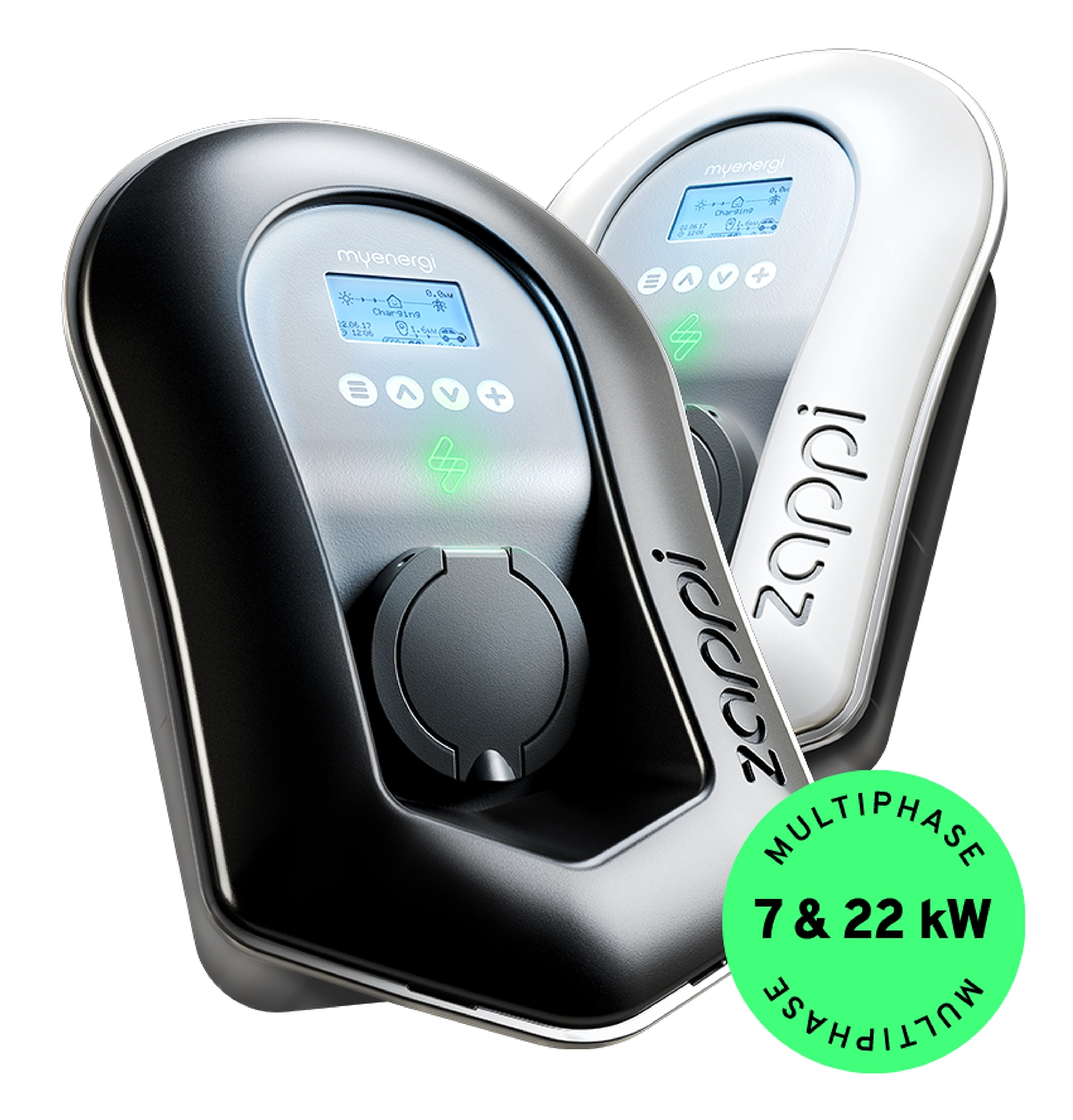
The myenergi Zappi offers three modes: Fast, which ignores solar and draws full power regardless, Eco, which tops up from the grid to maintain a minimum charge rate when solar alone is not enough, and Eco+, which charges from solar only and pauses when generation drops too low. It works via a CT clamp at the switchboard and is inverter agnostic, meaning it works with Fronius, SolarEdge, Sungrow, Enphase and most other brands. Ohme's Home Pro and ePod chargers offer an equivalent Solar Boost feature, and notably include the CT clamp in the box, where some rivals charge extra for it. Ohme also claims integration with more than 14,000 Australian electricity tariffs, letting it shift grid top ups to the cheapest available window when solar alone will not finish the job.
What if you drive a Tesla
Tesla's own Wall Connector does not have a built in solar matching mode equivalent to the Zappi or Ohme. Tesla owners wanting to charge from solar generally schedule charging manually through the Tesla app to overlap with typical solar generation hours, which approximates a solar match without dynamically adjusting to real time export. For genuine automatic solar matching on a Tesla, a third party energy management system or a solar capable charger from another brand is the more precise option.
What you need to set this up properly
An existing rooftop solar system, of any inverter brand, since the CT clamp method used by Zappi and Ohme does not depend on which inverter you have. A solar capable smart charger rather than a basic unit. The CT clamp itself installed at your main switchboard, included free with Ohme, sometimes an added cost with other brands. Home wifi or mobile connectivity for the charger's app, since scheduling, mode switching and monitoring all happen through it. And a proper dedicated circuit installation, the same standard as any other home wallbox, not a shortcut.
Is it worth the extra cost
If you already have solar and plan to charge during the day reasonably often, yes. The price difference between a basic and a solar capable smart charger is typically a few hundred dollars, easily recovered over a year or two given how much more that kWh is worth used directly rather than exported at a few cents.
See why export rates make this worthwhile in our feed in tariffs guide, and check installed pricing in home EV charger installation cost. Compare EVs and reviews on CarTell.tv.
Frequently asked questions
Does plugging my EV in during the day mean it is charging from solar?
Not necessarily. A basic charger draws a fixed rate regardless of your actual solar output, so you can still be drawing grid power even while charging in daylight, unless you have a smart, solar matching charger.
What is a CT clamp and why does my solar charger need one?
A current transformer clamp fitted at your switchboard that measures real time solar export. Smart chargers like the Zappi and Ohme use it to automatically throttle the car's charging rate to match available solar.
Can I charge from solar with a Tesla Wall Connector?
Not automatically. Tesla's charger has no built in solar matching mode, so Tesla owners typically schedule charging manually through the app to roughly overlap with solar hours, rather than matching in real time.
Which chargers support solar matching in Australia?
The myenergi Zappi and Ohme Home Pro or ePod both offer dedicated solar matching modes, and both work with most major inverter brands including Fronius, SolarEdge, Sungrow and Enphase.
Is a solar capable charger worth the extra cost?
Usually yes, if you already have solar and charge during the day. Given how low feed-in tariffs are, using solar directly for charging is worth several times more than exporting it, which typically recovers the extra hardware cost within a year or two.